


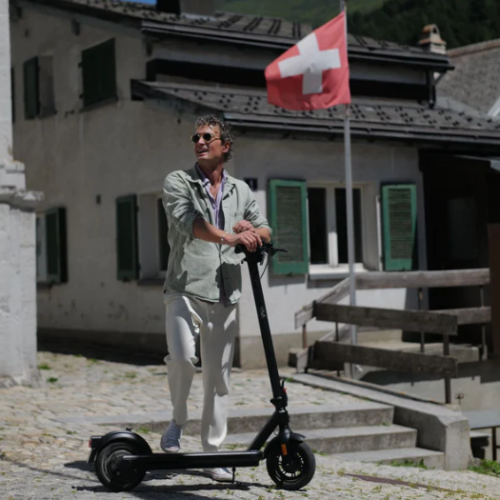



The load capacity of VMAX models ranges from 100 to 150 kilograms. Many people wonder: Can it carry more? What if I have a heavy backpack with me or if I've done some shopping spontaneously? In this article, you will find out what the maximum weight really is.
As a manufacturer, we specify the maximum load in kilograms in our user manual. This is the amount of weight you can load onto your scooter. Don't forget that your clothing and luggage can add some extra weight. Please keep in mind that a maximum load can always lead to limitations.
Increased wear
It is often read in forums about e-mobility that e-scooters work perfectly, even if the rider exceeds the maximum weight. This may be true for some models. However, the additional weight affects the vehicle's lifespan, as it is not designed for such loads. Over time, significant damage to components such as axles, brake discs, or tires is possible.
Longer braking distances
If the weight is too high, dynamic riding becomes more difficult. The more weight there is, the longer the braking distances will be. This means less safety while riding and delayed reactions. Additionally, the brakes are placed under more strain, resulting in quicker wear of the e-scooter. Please also note that it can lead to issues, for example, with insurance matters if the manufacturer's specifications are not followed.
Less power – less range
More load means more power needed. If the maximum power is exceeded, it may be that your scooter does not reach the top speed at all or only slowly. Climbing hills becomes more challenging, and the range of the e-scooter decreases and no longer matches the official specifications from the manufacturer.
Conclusion
Of course, the specifications of the models are values that manufacturers can certainly adhere to. Nevertheless, the margin we have calculated between safety and effective limits should not be exploited. Additional weight from clothing and luggage should not be underestimated.